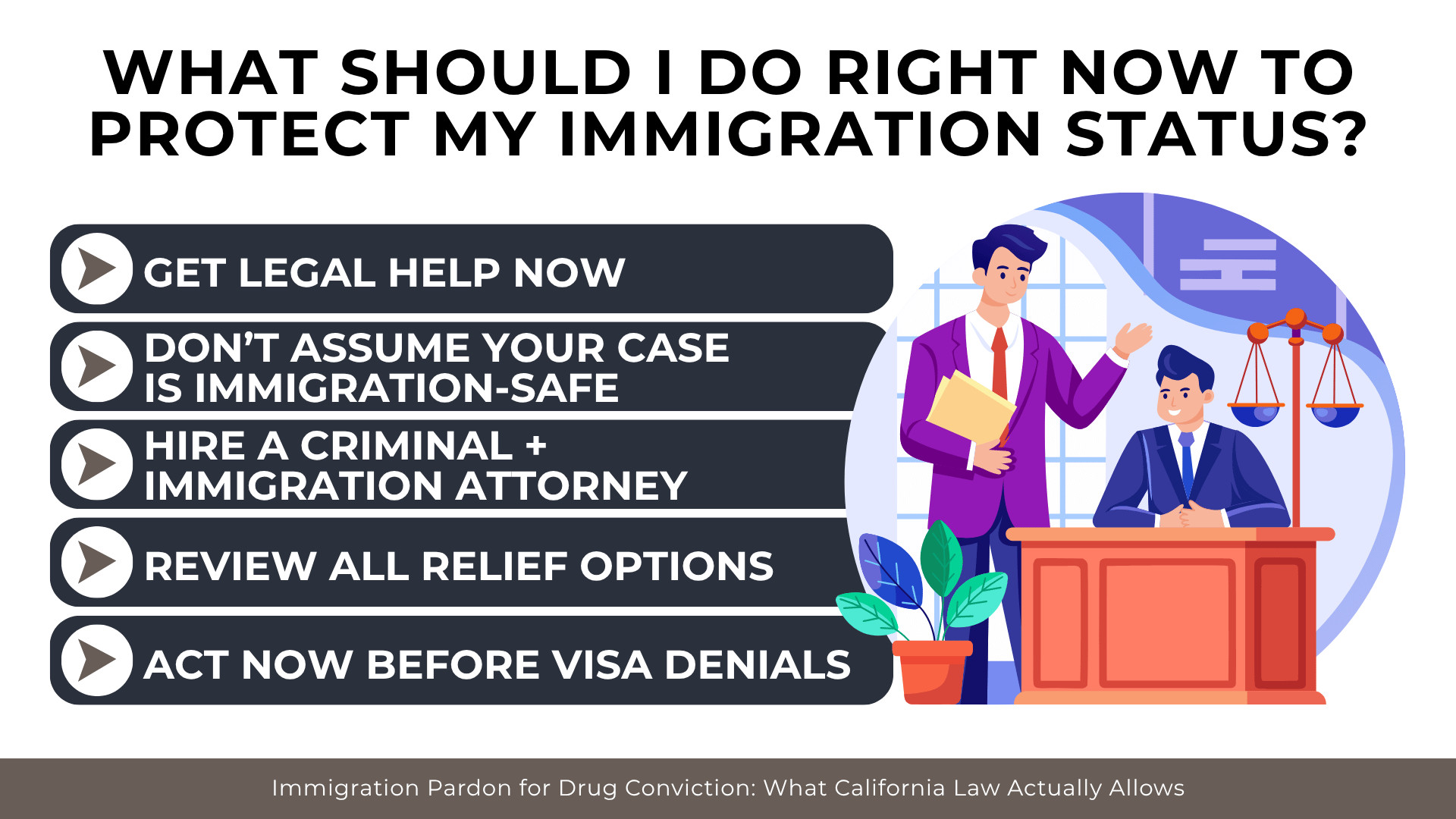

A pardon is one possible way to address the immigration consequences of a drug conviction. But it is far from the only path, and for most people, it is not the most realistic one. The phrase “immigration pardon” suggests a single fix, but the legal reality is more layered. Whether a pardon is the right option depends on the specific conviction, the specific statute, and the immigration consequence involved.
What Is an Immigration Pardon and How Does It Work in California?
When people search for an “immigration pardon,” they are usually looking for a way to make a drug conviction legally disappear for immigration purposes. A governor’s full and unconditional pardon is one option that may accomplish this. But it is discretionary, rare, and typically requires years of proven rehabilitation before it is even considered. It is not an application with a predictable timeline or a guaranteed outcome.
An expungement under § 1203.4 sets aside the conviction procedurally. A full pardon, by contrast, represents an act of executive clemency that may carry different weight in immigration proceedings. A presidential pardon addresses federal convictions and follows a separate process entirely.
This distinction matters. If you search for “immigration pardon for drug conviction,” you may be looking for a governor’s pardon, a presidential pardon, or — more likely — any legal option that removes the immigration consequences of a conviction. The pardon pathway exists, but for most people facing this situation, it is not the first or most practical option. Other forms of post-conviction relief may offer a more direct route.
What Should I Do Right Now to Protect My Immigration Status?
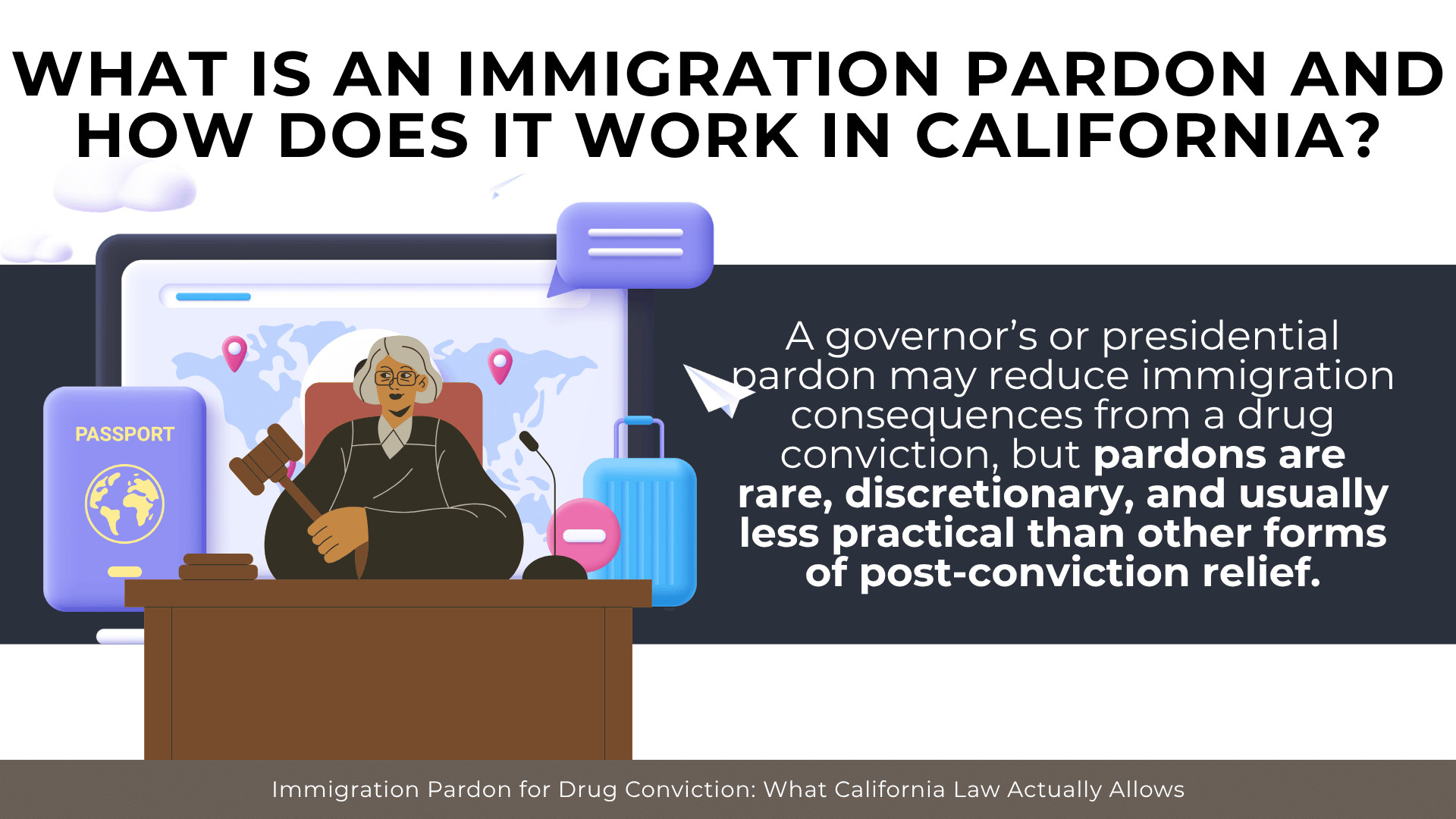
The intersection of criminal defense and immigration law is one of the most complex areas in law. The path forward depends on details that are impossible to assess without the specifics. These include the exact statute of conviction, the language of the plea colloquy, whether the substance was specified in the charging document, your current immigration status, and what immigration benefit you are seeking or what removal proceeding you are facing.
A pardon may not be the right option even when it is technically available. Whether the better path is executive clemency, challenging the original conviction, or a different form of post-conviction relief depends on the specifics. It requires an attorney who understands both how the criminal conviction was built and how federal immigration law will read it.
At Angelo Reyes Law in Carlsbad, California, criminal defense is handled with the understanding that the consequences of a drug case do not end at sentencing. Angelo Reyes prepares every case as if it is going to jury, to create leverage whether the matter resolves through negotiation or at trial. Clients work directly with Angelo, not a paralegal or associate, because cases at this intersection do not leave room for miscommunication about what is at stake.
If a drug conviction is threatening your immigration status or the status of someone you care about, the time to get a legal evaluation is now — before a visa application is denied, before removal proceedings begin, and before assumptions about what “resolved” means turn out to be wrong.