
Drug trafficking in California is a felony under Health and Safety Code sections 11352 and 11379. It covers more conduct than most people expect. You don’t have to be moving large shipments across the border. Under California law, transporting, selling, furnishing, administering, giving away, or even offering to do any of these things with a controlled substance can result in trafficking charges carrying years in state prison.
This page breaks down what trafficking actually means under California statute and how it differs from possession. It also explains what the penalties look like — including enhancements that can multiply the base sentence several times over.
What Counts as Drug Trafficking in California?
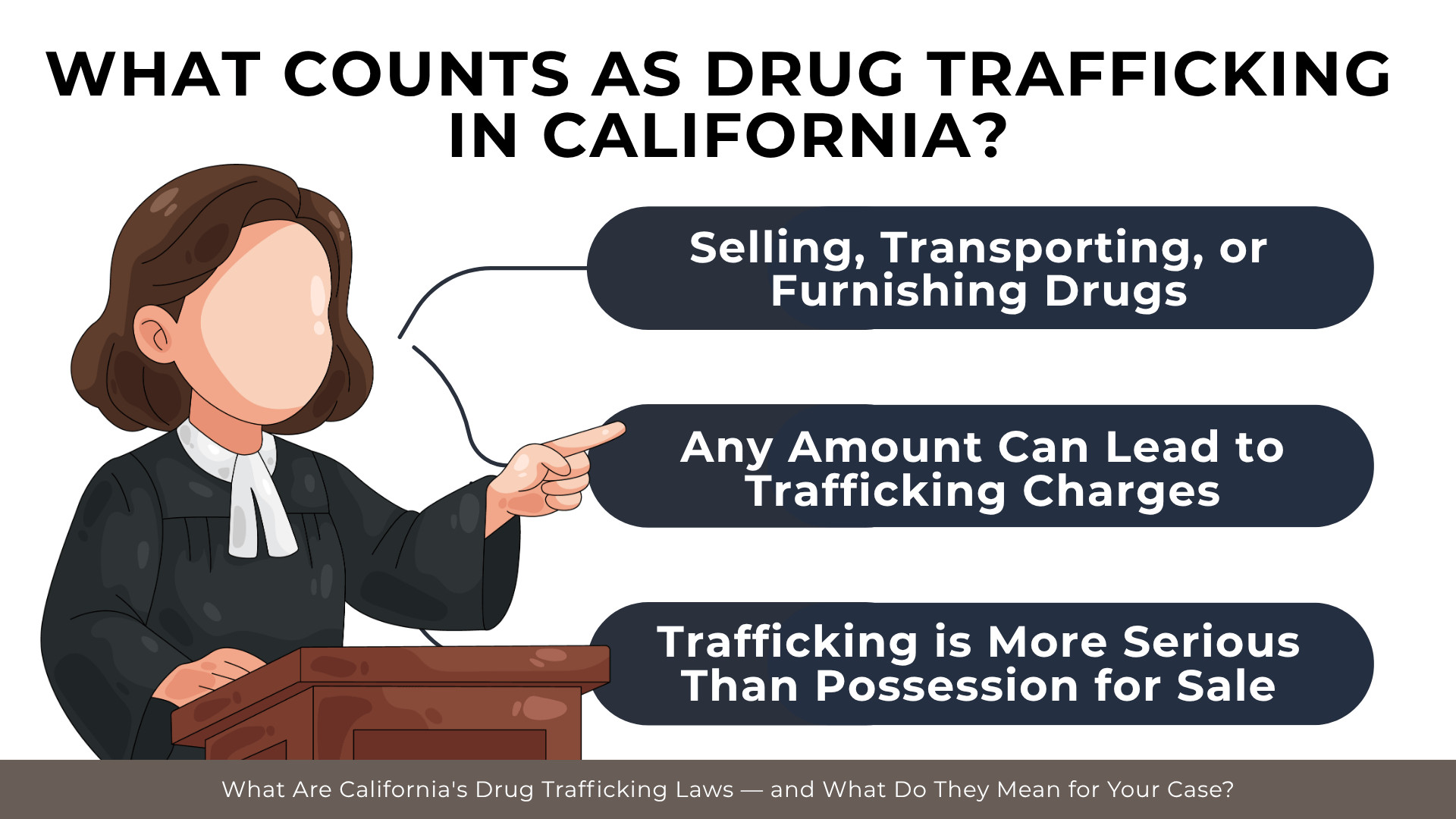
California’s trafficking statutes are broader than the word “trafficking” suggests. Health and Safety Code § 11352 applies to narcotics and certain controlled substances listed in Schedules III through V. It criminalizes transporting, importing, selling, furnishing, administering, or giving away these substances, as well as offering or attempting to do so. Health and Safety Code § 11379 covers the same conduct for non-narcotic controlled substances, including methamphetamine.
A common misconception is that trafficking charges require proof of a large quantity. They don’t. California has no statutory weight-based presumption that triggers a trafficking charge. The prosecution can bring trafficking charges based on evidence of a single sale or transport, regardless of amount. What separates trafficking from other drug offenses is the conduct — the act of moving, selling, or furnishing the substance — not a threshold on a scale.
It’s also important to distinguish trafficking from the closely related charge of possession for sale. Possession for sale under H&S Code § 11351 (narcotics) or § 11378 (non-narcotics like methamphetamine) targets someone holding a controlled substance with the intent to sell it. Trafficking under §§ 11352 and 11379 targets someone who has already taken or offered to take the next step: actually transporting, selling, or furnishing. Both are felonies, but trafficking carries heavier potential prison time, particularly when transport crosses county lines.
What’s the Difference Between Trafficking and Simple Possession?
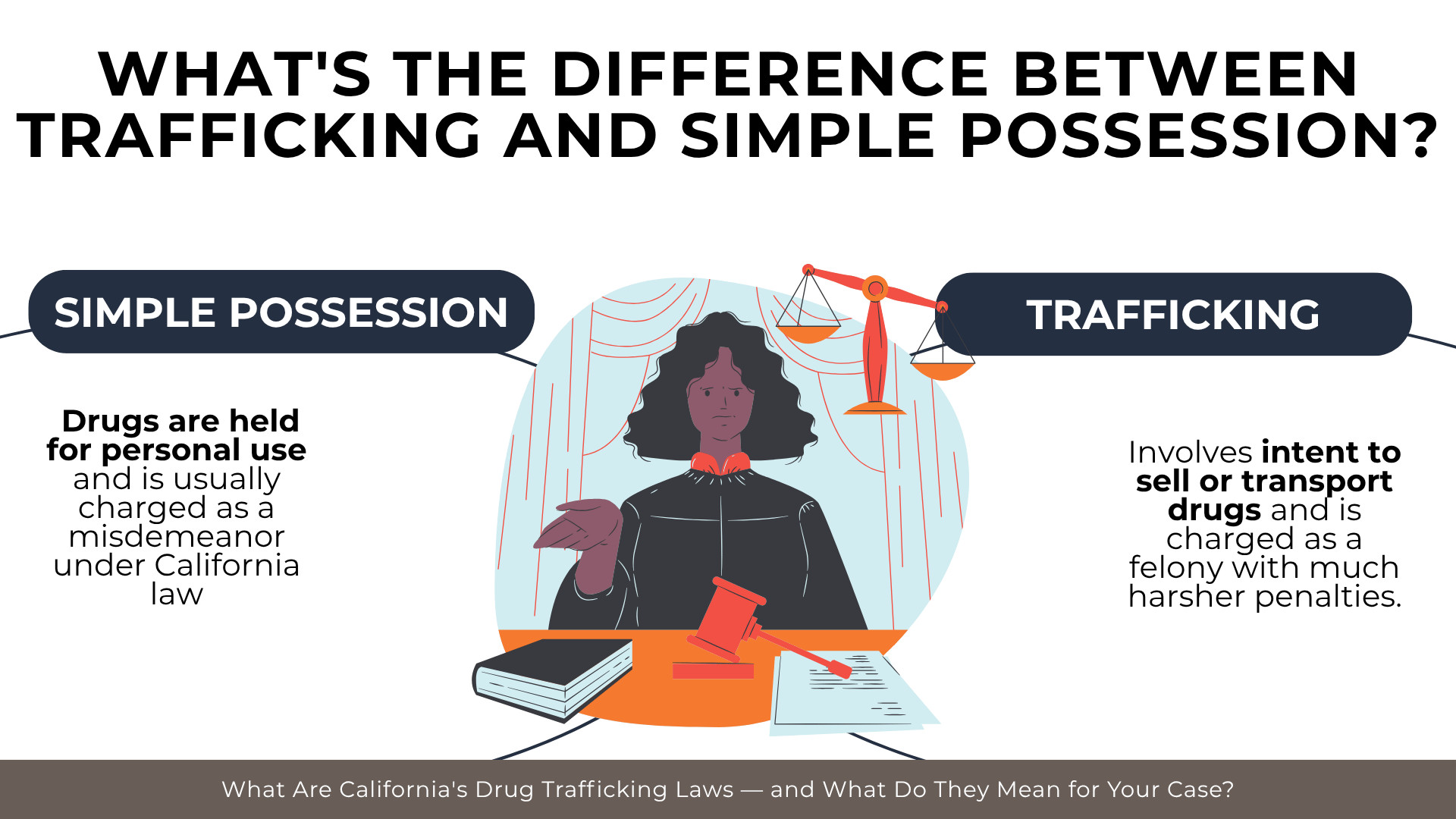
This distinction carries enormous consequences. Since Proposition 47 passed in 2014, simple possession of a controlled substance under H&S Code §§ 11350 and 11377 is generally a misdemeanor punishable by up to six months in county jail and a fine of up to $1,000. Trafficking under § 11352 is a felony with a sentencing range of three, four, or five years — and potentially far more with enhancements.
The line between the two often comes down to circumstantial evidence. Under California law, intent to sell is typically proven through what courts call “indicia of sale.” These include the quantity of the substance, how it was packaged (individual bindles or baggies), the presence of scales or pay-owe ledgers, large amounts of cash, multiple cell phones, and the absence of paraphernalia associated with personal use. In People v. Parra (1999) 70 Cal. App. 4th 222, the court held that experienced officers may offer an opinion, based on factors such as quantity and packaging, that drugs were possessed for purposes of sale.
This means the same physical evidence — a substance in someone’s possession — can support either a misdemeanor or a multi-year felony. The outcome depends on what else is found and how the prosecution interprets it. That gray area is where defense strategy matters most.
What Are the Penalties for Drug Trafficking in California?
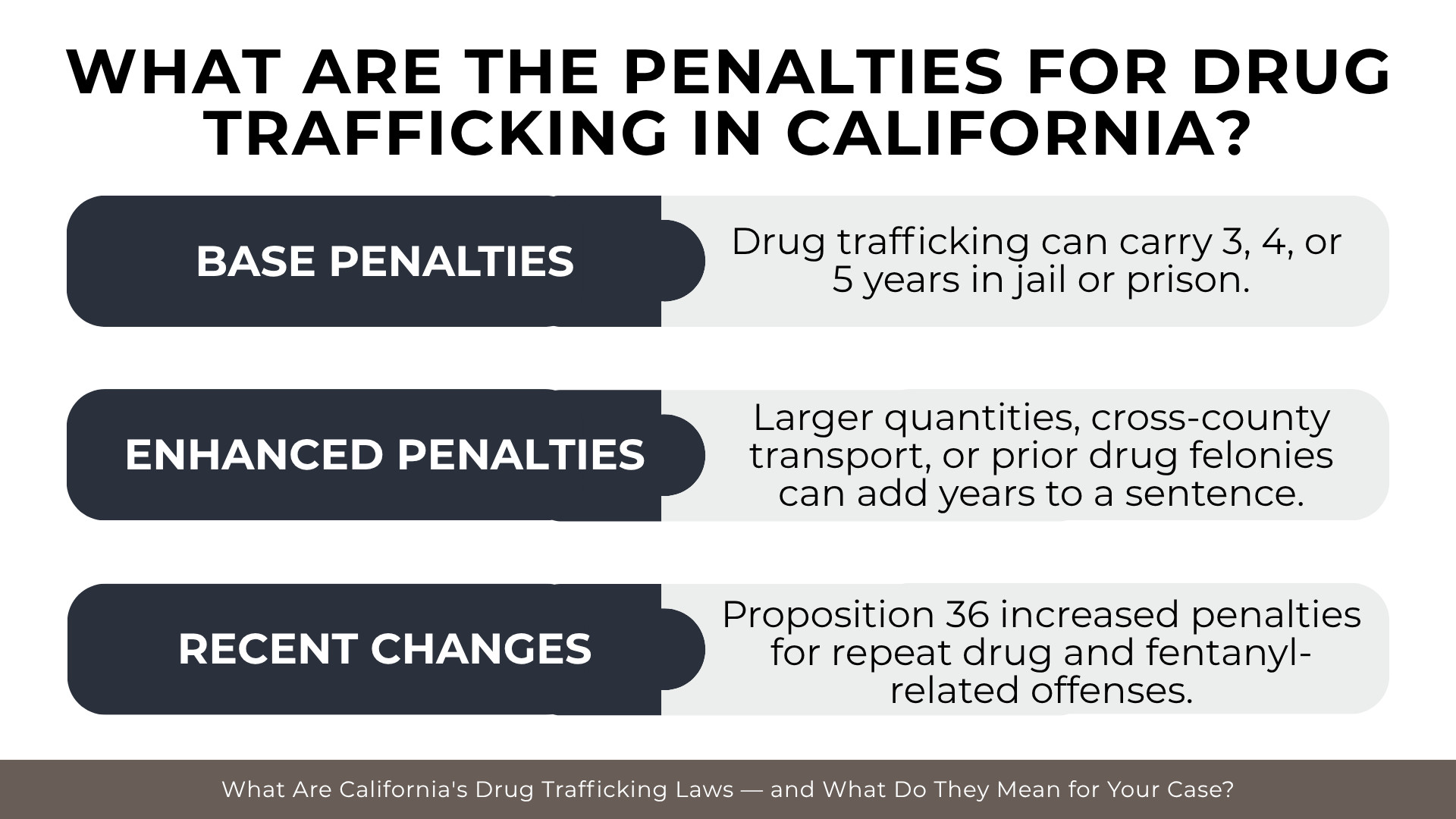
California drug sentencing works in tiers. For trafficking under H&S Code § 11352, the base term is three, four, or five years. Under Penal Code § 1170(h) — the realignment statute that took effect in 2011 — many of these sentences are served in county jail rather than state prison. The exception is if you have a serious or violent prior conviction or a specified enhancement applies.
The penalties escalate significantly in certain circumstances.
Transporting a controlled substance from one county to a county that doesn’t share a border increases the sentencing range to three, six, or nine years under § 11352. Weight-based enhancements under H&S Code § 11370.4 add three to twenty-five additional years for trafficking quantities above certain amounts — for example, one kilogram or more of heroin or cocaine. A prior felony drug conviction triggers a three-year enhancement under H&S Code § 11370.2.
The 2024 Proposition 36 — the Homelessness, Drug Addiction, and Theft Reduction Act, which took effect December 18, 2024 — is also reshaping the landscape. While its primary focus is on repeat possession offenses, it added fentanyl to the firearm-enhancement list alongside cocaine, heroin, and methamphetamine.
The distance between conviction and prison sentence is often determined by the strength of the defense.
What Should You Do Right Now?
Drug trafficking charges in California are serious, but the penalties are not fixed — they depend on the substance, the conduct, the quantity, and whether enhancements apply. The difference between a three-year base term and a twenty-five-year enhanced sentence is not determined by a formula. It is determined by how the case is charged, how the evidence is challenged, and whether the attorney handling the case has the preparation to contest every element the prosecution needs to prove.
Angelo Reyes Law, based in Carlsbad, California, handles drug trafficking and other criminal defense cases across San Diego County. Angelo Reyes prepares every case as though it’s going to a jury — an approach that creates leverage whether a case resolves through negotiation or at trial. His results include a 25-to-life case dismissed, felony strike exposures reduced to simple misdemeanors, and multiple DUI and grand theft dismissals.
If you or someone close to you is facing drug trafficking charges, the decisions made in the next few days and weeks will shape the outcome. Contact Angelo Reyes Law to discuss the facts of your case directly with the attorney who will handle it.