
A possession of fentanyl charge in California is prosecuted under Health & Safety Code § 11350. For most people — those without certain serious prior convictions — it is a misdemeanor carrying up to six months in county jail and a fine of up to $1,000. That matters more than you might expect. Fentanyl sounds like a word that automatically means prison, but in most cases under current California law, it does not.
But the full picture is more complicated than one statute. What actually happens with your case depends on your prior record, the county where you’re charged, and whether the 2024 Proposition 36 applies to your situation. This page walks through how fentanyl possession is classified in California, what makes it different from other drug charges right now, and why the timing of your defense matters.
Is Fentanyl Possession a Felony or a Misdemeanor in California?
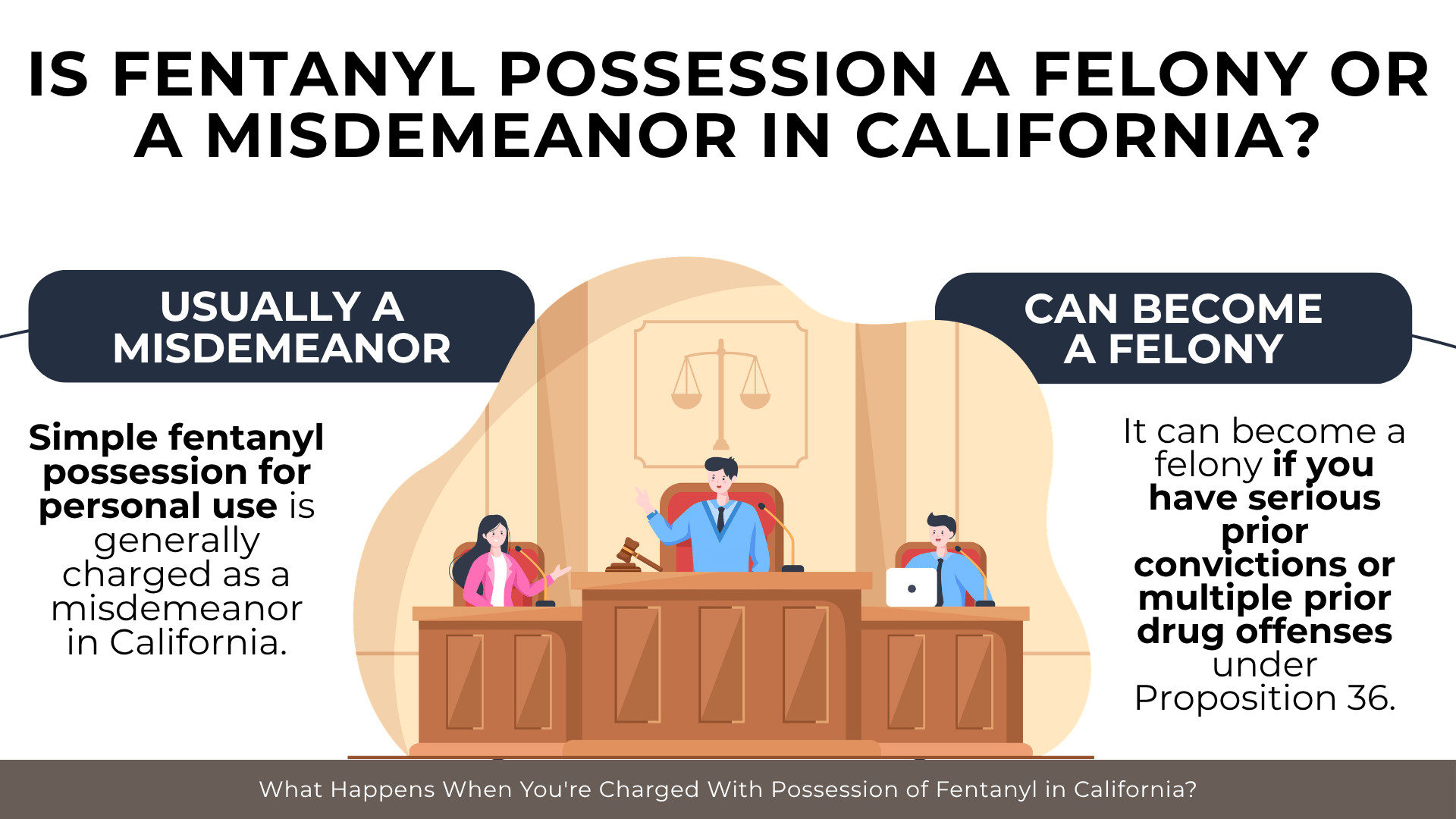
Fentanyl is classified as a Schedule II controlled substance under California Health & Safety Code § 11055. Simple possession — meaning possession for personal use, not for sale — is charged under Health & Safety Code § 11350 and is generally a misdemeanor carrying up to six months in county jail under Penal Code § 19 and a fine of up to $1,000. Felony exposure exists for defendants with prior “super-strike” convictions under Penal Code § 667(e)(2)(C)(iv) or those required to register under Penal Code § 290(c), in which case the triad is 16 months, 2 years, or 3 years.
There is also a newer law to know about. The 2024 Proposition 36 (effective December 18, 2024) created Health & Safety Code § 11395 — a “treatment-mandated felony” that applies when someone is charged with possession of a hard drug, including fentanyl, and has two or more qualifying prior drug-related convictions. If you complete the court-ordered treatment program, the felony is dismissed. If you do not complete treatment, you face up to 3 years.
Prop 36 also added fentanyl to the list of substances that trigger firearm-related sentencing enhancements — a list that previously included only cocaine, heroin, and methamphetamine. That addition signals how California law is treating fentanyl more seriously even as simple possession remains a misdemeanor for most people.
The bottom line is that “possession of fentanyl” does not automatically mean felony, and it does not automatically mean prison. If this is your first or second offense, the charge remains a misdemeanor with ways to get it dismissed. But your prior record and the county where you’re charged matter enormously.
Why Does It Matter When You Hire a Lawyer?
The statewide felony conviction rate is 60%. For fentanyl possession cases specifically, the classification of your charge — misdemeanor or felony, simple possession or possession for sale — determines which ways to resolve your case are available, including diversion programs that end in a full dismissal. Those decisions happen early. They depend on the facts of your stop, your record, and how your case is presented to the prosecutor before the first hearing.
If Prop 36’s treatment-mandated felony applies to your situation, the stakes of early legal strategy are even higher. Completing court-ordered treatment means the felony is dismissed entirely. But the window to position your case for that outcome — or to challenge the charge level, the search that produced the evidence, or the prior convictions the prosecution is relying on — narrows quickly.
Angelo Reyes is a trial attorney licensed in California and Washington, admitted to the U.S. District Court for the Southern District of California, and named to the National Trial Lawyers Top 40 Under 40. At Angelo Reyes Law in Carlsbad, you work directly with Angelo — not a paralegal, not an associate — and every case is built for trial from day one. That preparation is what creates leverage, whether the case ends in a negotiated dismissal or a jury verdict. His results include felony strike exposures reduced to simple misdemeanors, a 25-to-life case dismissed entirely, and multiple DUI and grand theft dismissals across San Diego County.
If you or someone close to you is facing a possession of fentanyl charge, the most important thing you can do right now is talk to a criminal defense attorney who handles these cases before your next court date. Contact Angelo Reyes Law for a consultation.