After a domestic violence arrest in California, you are booked into county jail and held until bail is posted or a judge sets release conditions. In almost every case, a protective order restricting contact with the alleged victim takes effect as well — all before a formal charge is even filed. The process moves fast, and the decisions made in the first few days shape the course of the entire case.
This page walks through that process from start to finish: what happens at the jail, how bail works, what the protective order means in practice, what charges are likely, what happens at the first court appearance, and what the potential consequences look like if the case results in a conviction.
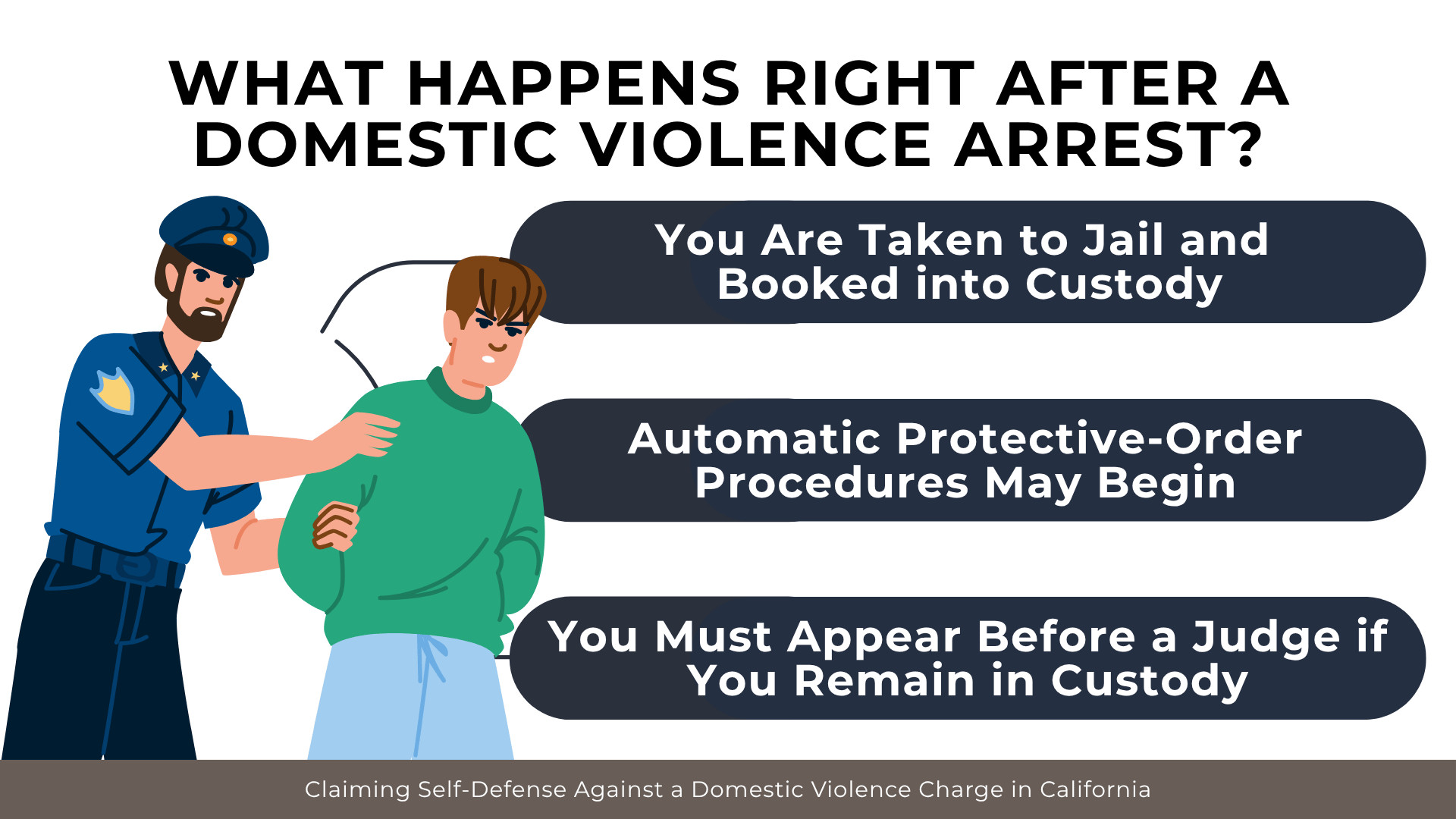
What Happens Right After a Domestic Violence Arrest?
The arrest itself follows a familiar sequence. You are transported to a local jail facility and booked into custody.
What makes a domestic violence arrest different from most other bookings is what happens alongside it. California law enforcement responded to 163,024 domestic violence-related calls in 2024 alone. Because DV cases are processed in such high volume, the system has built-in steps that activate automatically — particularly protective orders, which are discussed below.
If you remain in custody and do not post bail, you must be brought before a judge for arraignment. What happens at that hearing depends heavily on whether you have legal representation by that point.
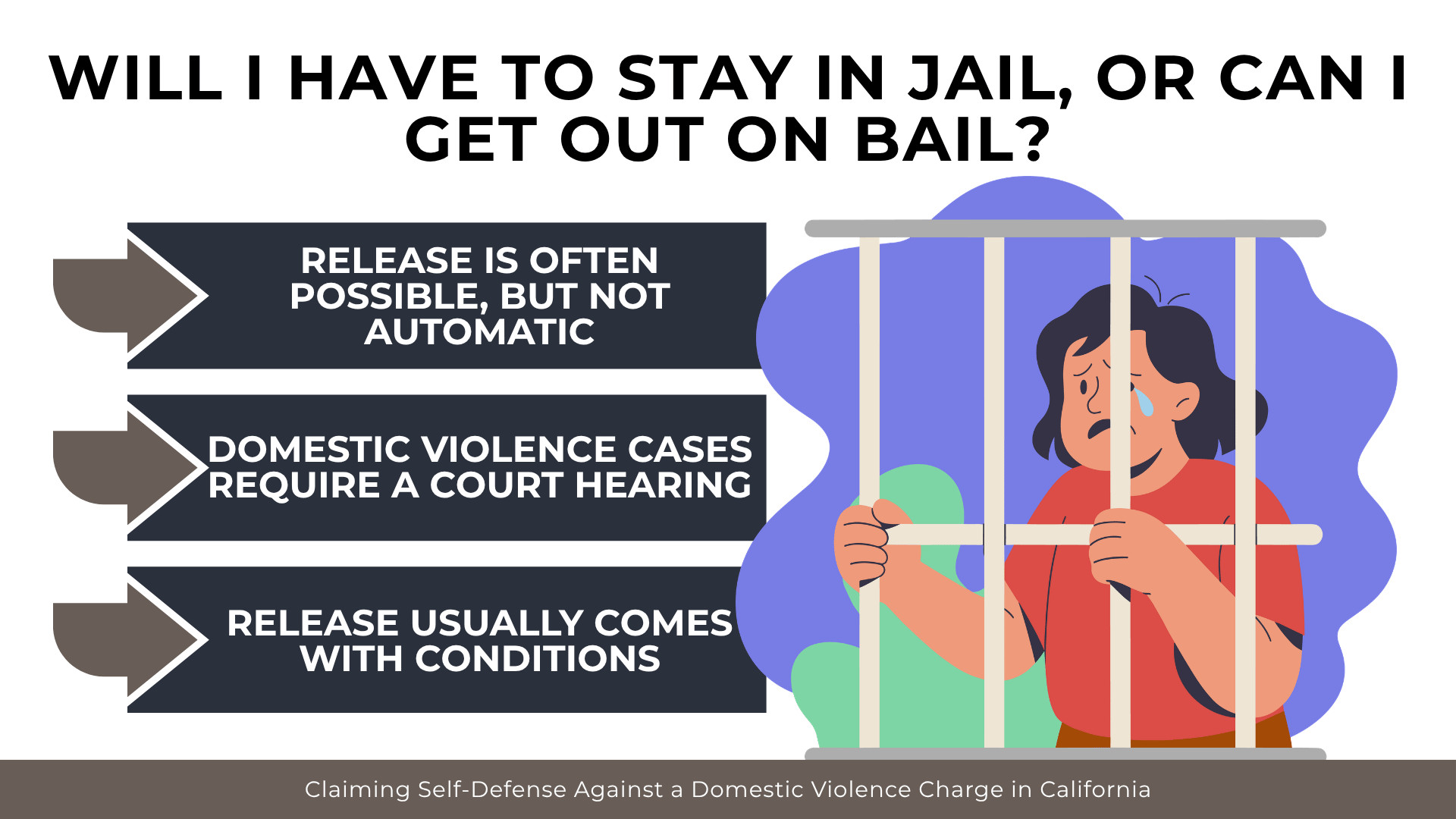
Will I Have to Stay in Jail, or Can I Get Out on Bail?
Release is usually possible after a domestic violence arrest, but it is not automatic and it comes with conditions.
California counties maintain bail schedules that set default amounts by charge. To put a number on it, the Los Angeles County felony bail schedule sets bail for a Penal Code 273.5 corporal injury charge at $50,000. Schedules vary by county, and San Diego County — where Angelo Reyes Law handles criminal defense cases — maintains its own schedule.
One thing worth knowing: domestic violence offenses are specifically excluded from zero-bail release policies. The California Supreme Court’s decision in In re Humphrey (2021) reformed the state’s bail system. Even so, DV charges under Penal Code sections 273.5, 243(e)(1), and 273.6 still require a hearing before any bail adjustment. At that hearing, a judge will evaluate the severity of the allegations, your criminal history, flight risk, and perceived danger to the alleged victim. Based on those factors, the judge will decide whether to reduce bail, grant own-recognizance release, or keep the original amount in place.
If bail is posted, the release will come with conditions. Those conditions almost always include a protective order.
What Is the Protective Order, and Can I Go Home?
A protective order is one of the first legal consequences of a domestic violence arrest. It often takes effect before anyone sets foot in a courtroom.
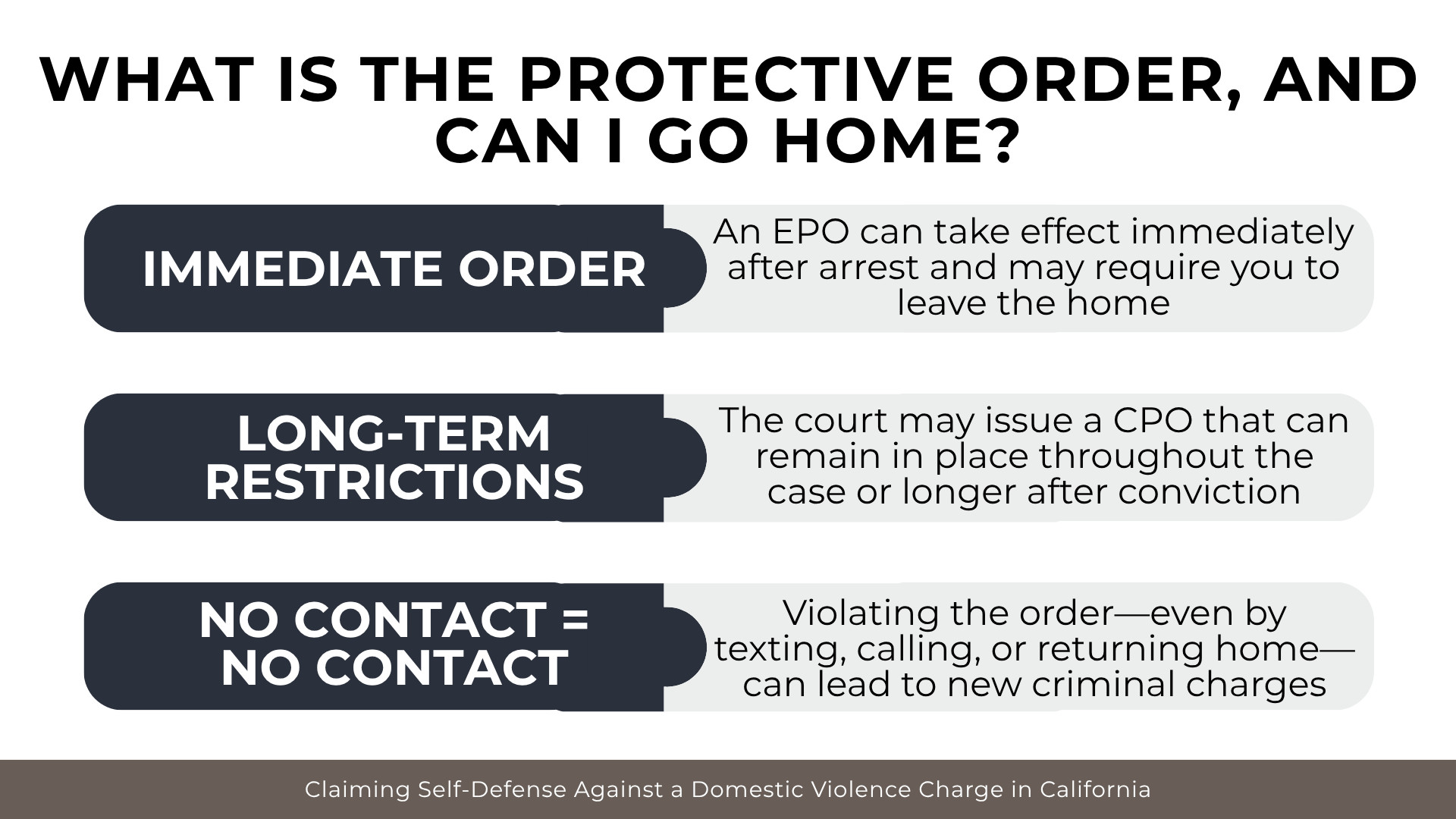
Under California Family Code section 6250, a law enforcement officer can request an Emergency Protective Order from a judge at the time of the arrest. Judges are available for this purpose at all times — including nights and weekends — whether or not court is in session. An EPO takes effect immediately. It expires at the close of business on the fifth court day after it is issued or on the seventh calendar day, whichever comes first. During that window, the order typically prohibits any contact with the protected person and may require staying away from a shared residence.
Once the case moves to court, the judge will typically issue a Criminal Protective Order under Penal Code section 136.2. A pre-conviction CPO can be issued when the court finds good cause to believe that harm to or intimidation of a victim or witness has occurred or is reasonably likely to occur. If the case ends in a conviction, the CPO can last up to ten years — or up to fifteen years for a corporal injury conviction under Penal Code 273.5.
Here is what matters most about protective orders in practical terms: violating one is a separate crime. Under Penal Code section 273.6, a first violation is a misdemeanor carrying up to one year in county jail and a fine up to $1,000. A violation that results in physical injury carries a mandatory minimum of 30 days in county jail and a fine up to $2,000. Going back to the house to pick up clothes, sending a text to explain what happened, passing a message through a friend — any of these can result in a new arrest and new charges on top of the original case.
This is one of the most common and most damaging mistakes people make after a DV arrest. A defense attorney at Angelo Reyes Law in Carlsbad can advise on how to handle the protective order. That includes how to request a modification if the current terms create hardship — without putting your case at risk.
What Charges Could I Be Facing?
Most domestic violence arrests in California lead to one of two charges, and the difference between them matters significantly.
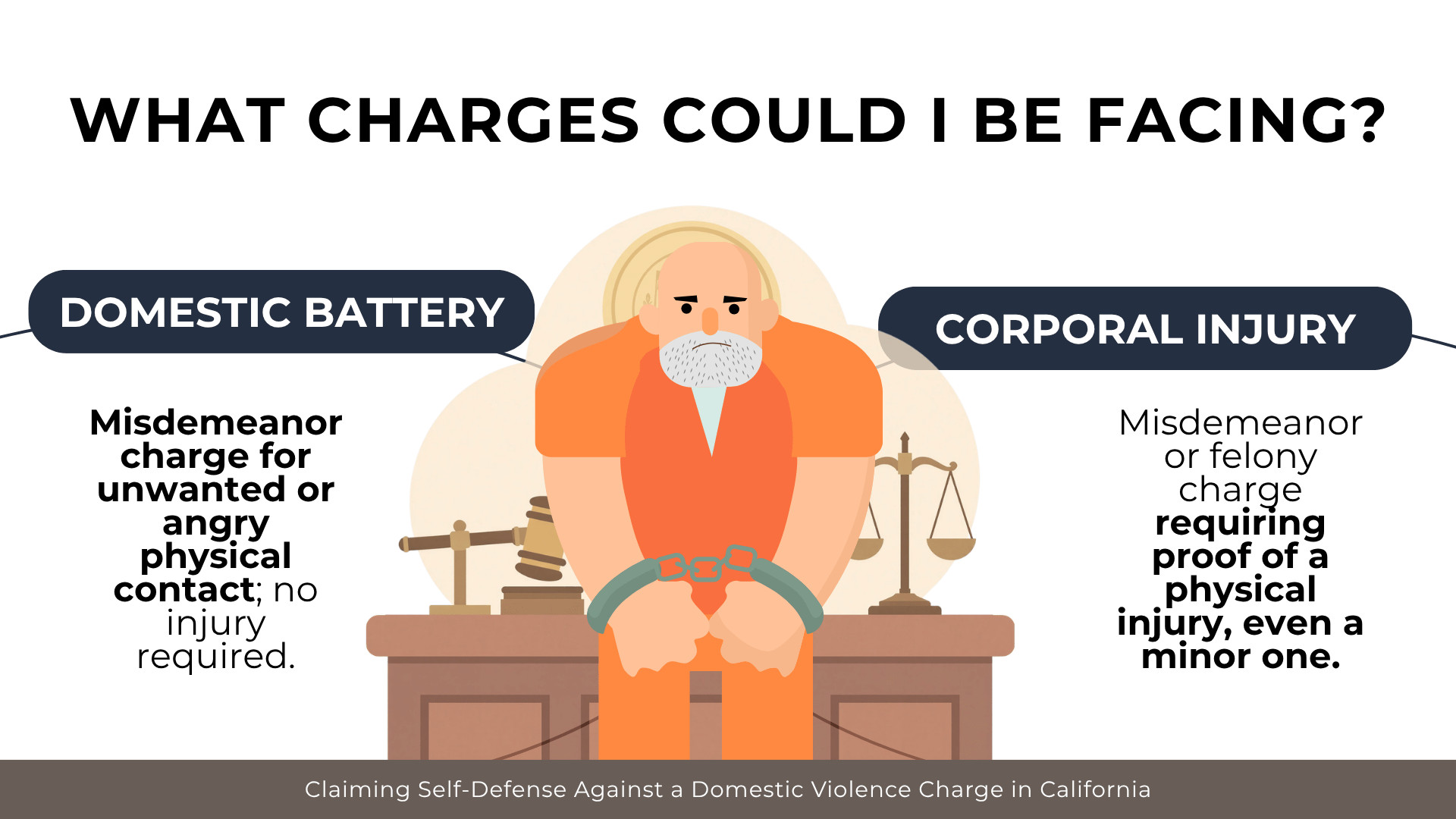
Penal Code 243(e)(1) — Domestic Battery. This is a straight misdemeanor. It does not require any physical injury. Under California law, any willful and unlawful touching in a rude or angry manner against a spouse, former spouse, cohabitant, fiancé, dating partner, or parent of your child is enough. The penalty is up to one year in county jail, a fine up to $2,000, or both.
Penal Code 273.5 — Corporal Injury to a Spouse or Cohabitant. This charge requires proof of a “traumatic condition,” which the statute defines as a condition of the body — such as a wound or external or internal injury, including injury from strangulation or suffocation — caused by physical force. A traumatic condition can be minor; it does not need to be serious. This is a “wobbler,” meaning the prosecutor can file it as either a misdemeanor or a felony. As a felony, it carries two, three, or four years in state prison, or up to one year in county jail, or a fine up to $6,000, or both. With a prior DV conviction within seven years, the range increases to two, four, or five years in state prison with fines up to $10,000.
The wobbler decision — misdemeanor or felony — depends on factors including the severity of the injury, whether a weapon was involved, whether strangulation occurred, your prior record, and whether children were present. Nationally, approximately 80% of domestic violence cases are filed as misdemeanors.
When Is the Arraignment, and What Happens There?
The arraignment is the first formal court appearance. If you are still in custody, the arraignment happens quickly. If you posted bail and were released, it may be scheduled days or weeks later.
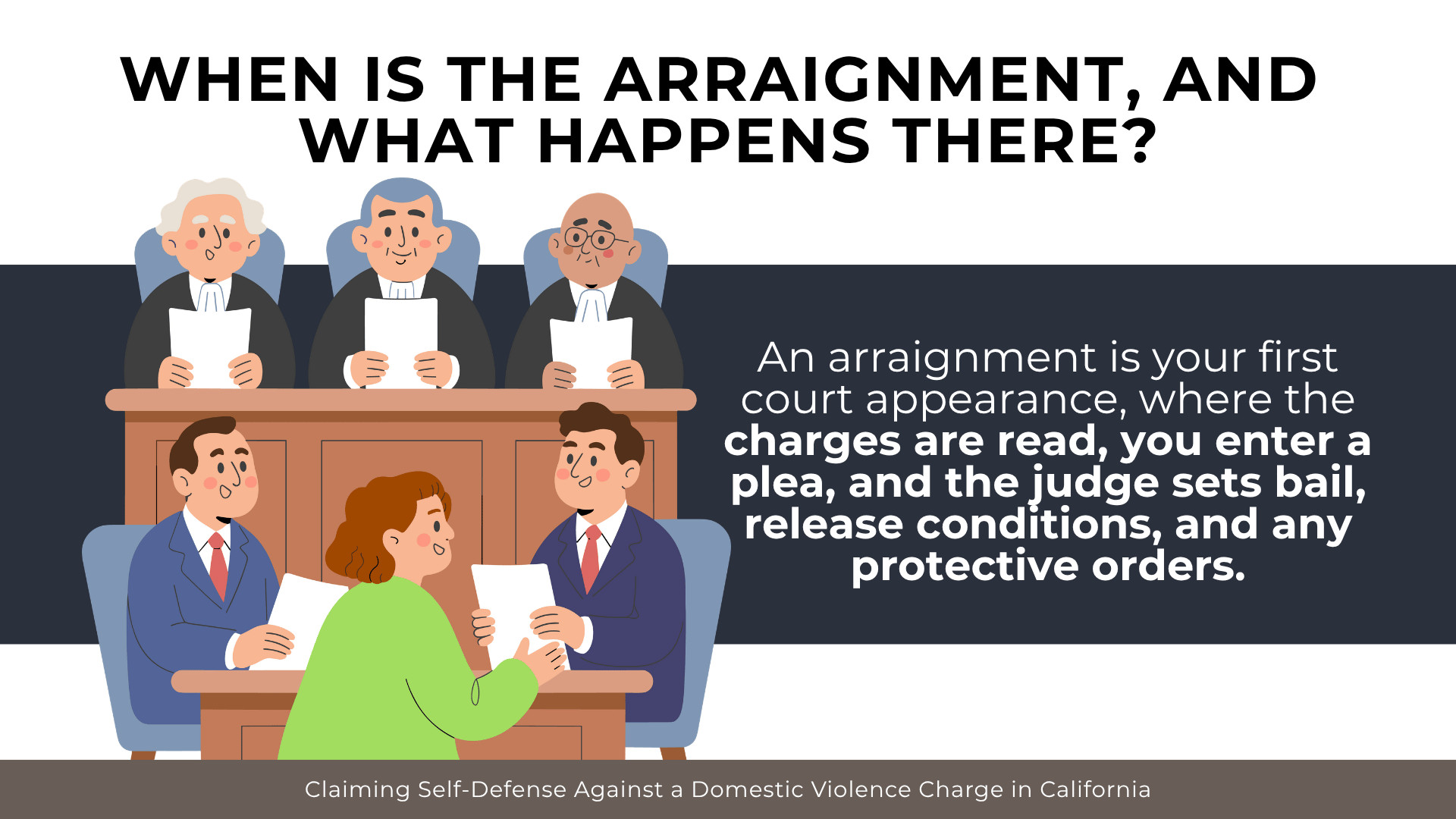
At the arraignment, three things happen. First, the charges are formally read — this is the first official confirmation of exactly what the prosecution is claiming. Second, you enter a plea (typically not guilty at this stage). Third, the court addresses bail and release conditions, which includes issuing or extending the criminal protective order.
This hearing sets the terms for everything that follows. The bail amount can be increased or decreased. Conditions of release can be tightened or loosened. The terms of the protective order are set. Having a defense lawyer at this hearing — rather than appearing alone — gives you someone who can argue for reasonable conditions. It also means someone is identifying problems with the prosecution’s case from the start.
Can the Charges Be Dropped if the Other Person Doesn’t Want to Prosecute?
This is one of the most common questions after a domestic violence arrest, and the answer is almost always misunderstood.
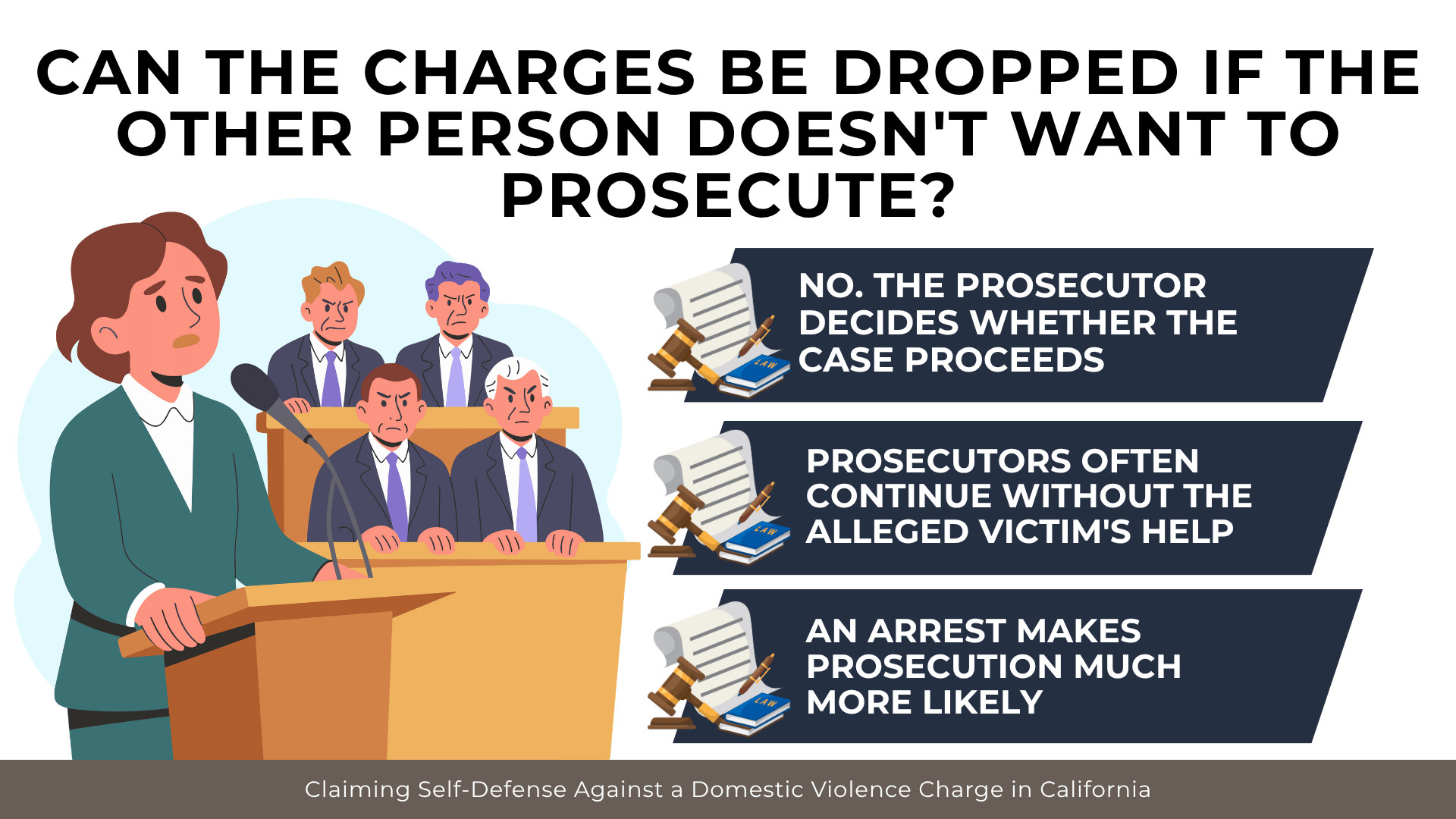
In California, criminal charges are brought by the prosecution — the district attorney’s office — not by the alleged victim. The person identified as the victim cannot “drop charges” because they are not the one who filed them. Even if the alleged victim contacts the DA’s office and says they do not want the case to proceed, the prosecutor still decides whether to move forward.
And they often do. Prosecutors can and do proceed with DV cases without the alleged victim’s ongoing participation. A Bureau of Justice Statistics study found that 78% of DV cases that were not prosecuted were dismissed because victims would not cooperate. That confirms non-cooperation is the leading reason cases fall apart. But it also means 22% of dismissed cases fell apart for other reasons entirely. And many cases proceed to conviction without the victim’s ongoing participation.
There is also a flip side. When law enforcement conducts only a basic investigation, prosecutors decline to file charges roughly 70% of the time. But once an arrest is made, the filing decision shifts sharply — arrest increases prosecution likelihood by 92 to 96 percent. The bottom line: after an arrest has been made, assuming the case will simply go away is one of the most dangerous things you can do.
What Are the Penalties if I’m Convicted?
Sentencing for a domestic violence conviction depends on the charge, your history, and whether the court grants probation.
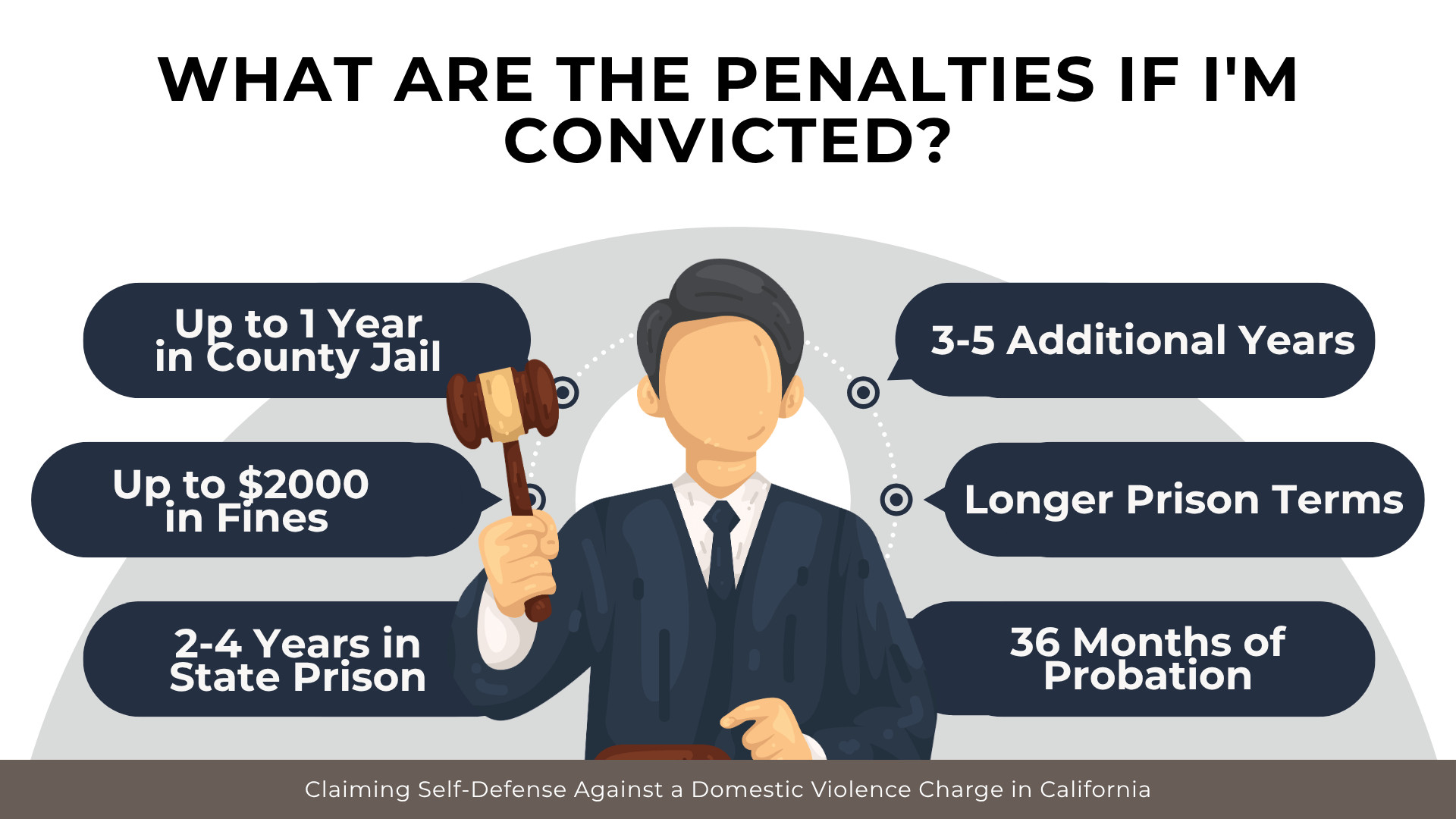
For a misdemeanor domestic battery under Penal Code 243(e)(1), the maximum is one year in county jail and a $2,000 fine. For a felony corporal injury conviction under Penal Code 273.5, the range is two to four years in state prison, with enhancements for prior convictions or great bodily injury. A great bodily injury enhancement under Penal Code 12022.7 adds three, four, or five additional years. If you have a prior DV conviction within seven years, Penal Code 273.5(f) raises the prison range to two, four, or five years. Probation with a prior DV conviction within seven years also triggers mandatory minimum jail time — 15 days for one prior, 60 days for two or more under Penal Code 273.5(h).
For first offenses, courts frequently grant probation rather than imposing a prison sentence. But probation in a DV case is not a light outcome. Under Penal Code 1203.097, when probation is granted for any offense involving a victim who qualifies under Family Code 6211, the court must order a specific set of conditions. These include a minimum 36-month probation term, completion of a one-year batterer intervention program with weekly sessions of at least two hours, a minimum $500 fine paid to domestic violence programs, victim restitution, community service, and a criminal protective order.
The batterer intervention program alone is a serious commitment. A California State Auditor report found that 46 out of 100 DV offenders did not complete the required program. Some never enrolled, some dropped out, and some were terminated. Among those who failed to complete it, 65% were re-arrested for DV or abuse-related offenses. Courts imposed consequences for only about 9% of known violations. The takeaway is twofold: completing the program matters, and the system does not always enforce compliance on its own. The consequences of falling behind tend to surface all at once and late.
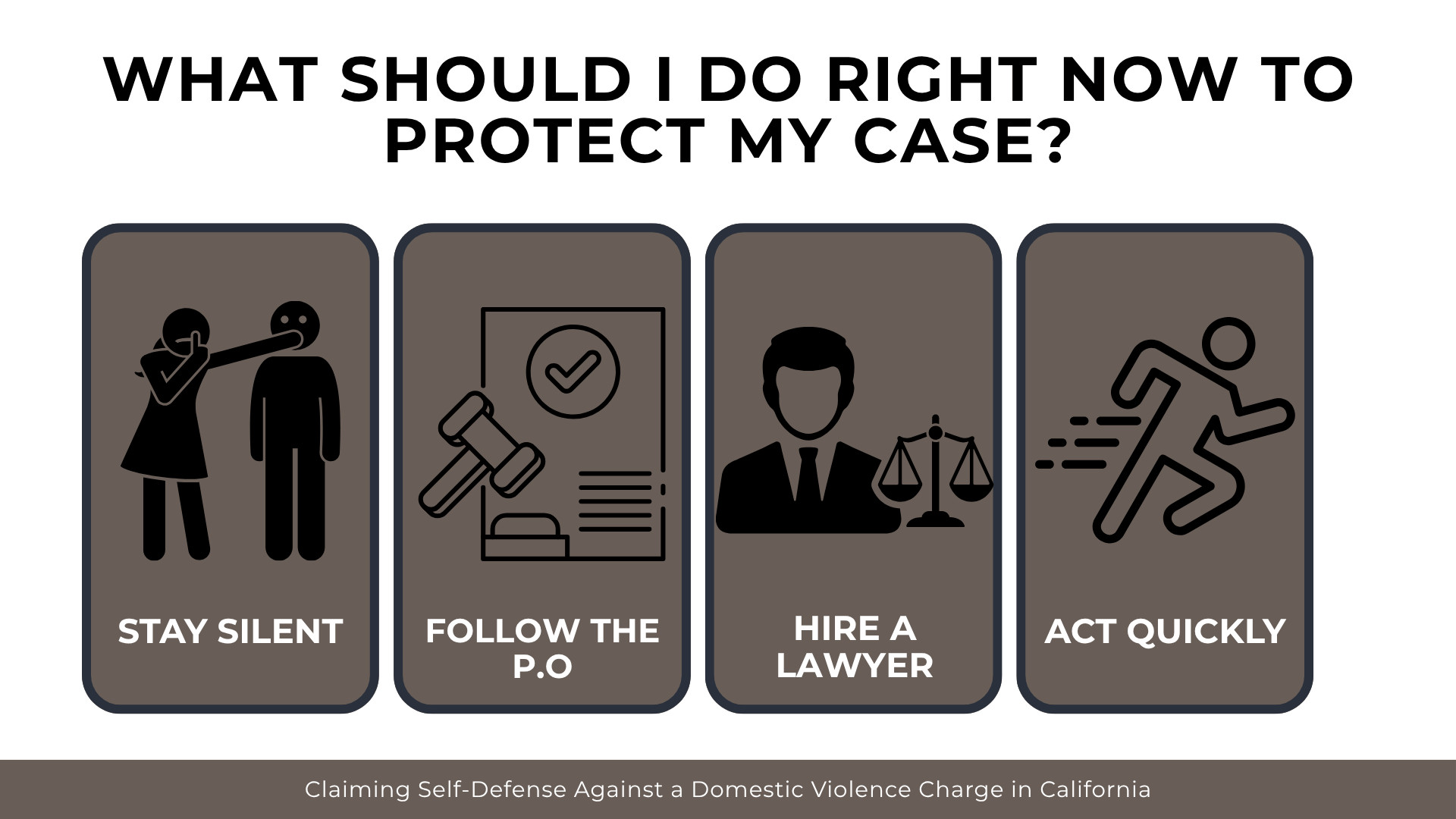
What Should I Do Right Now to Protect My Case?
Three things matter more than anything else in the first days after a domestic violence arrest.
Do not discuss the case with anyone other than a lawyer. Not with the alleged victim, not with friends, not with family members who might later be called as witnesses. Anything said can become evidence. The instinct to explain what happened or to “get ahead of the story” is understandable, but it almost always makes the case harder to defend.
Comply with the protective order completely. Even if the terms feel excessive. Even if the other person reaches out first. Even if it means finding somewhere else to stay for weeks. A protective order violation is a separate criminal charge. It also signals to the court and the prosecution that you do not take the process seriously. That perception affects everything from bail to plea negotiations to sentencing.
Get a criminal defense lawyer involved before the arraignment. The arraignment is where charges are confirmed, bail is argued, and the protective order is set. Walking into that hearing without representation means accepting whatever the prosecution asks for without challenge. The earlier a lawyer is involved, the more room there is to influence how the case develops — from the conditions of release to the final outcome.
Angelo Reyes at Angelo Reyes Law in Carlsbad handles criminal defense cases across San Diego County. Every case is prepared as though it is going to trial, whether the matter resolves through negotiation or in front of a jury. Clients work directly with Angelo — not a paralegal, not an associate. His case results include felony strike exposures reduced to simple misdemeanors, a 25-to-life case dismissed, and attempted murder reduced to battery.
If you or someone close to you is facing a domestic violence charge, the consultation is the first step toward understanding what you are actually up against and what can be done about it. Contact Angelo Reyes Law to discuss your case.